


Slots, Poker, and the House Edge: A Realistic Guide
Most people lose money at casinos. That's not pessimism; it's arithmetic. Every game on the floor is built around a mathematical advantage for the operator
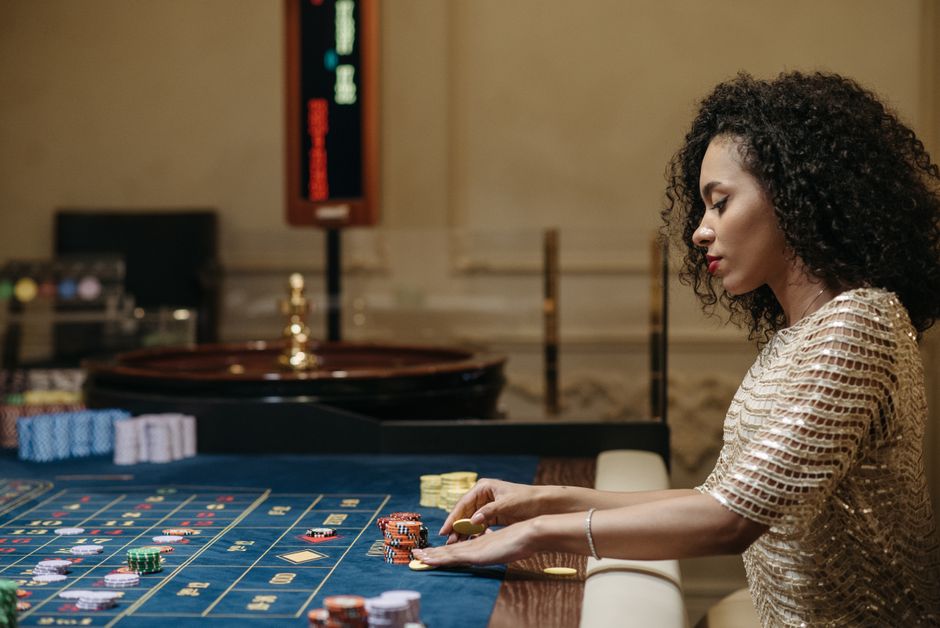
Most people lose money at casinos. That's not pessimism; it's arithmetic. Every game on the floor is built around a mathematical advantage for the operator, and the moment you understand that number — the house edge — you stop seeing slots and poker as a single blurry category called "gambling" and start seeing them as radically different products with radically different costs.
Here's the uncomfortable math most players never bother to learn, and why it changes how you should play.
The House Edge Is the Only Number That Matters Long-Term
Forget the flashy jackpot graphics and the "97% payout" stickers. What matters is the house edge — the percentage of every dollar wagered that the casino expects to keep over millions of bets. There is a useful overview at iwin68club.it.com.
- Blackjack (basic strategy): roughly 0.5%
- Baccarat (banker bet): about 1.06%
- European roulette: 2.7%
- American roulette: 5.26% (the extra double-zero is brutal)
- Slots: typically 2% to 10%, often worse on progressive machines
That gap compounds fast. Wager $10,000 at blackjack with proper strategy and your expected loss is around $50. Do the same on a slot with a 7% edge and you're looking at $700. Same entertainment, same bankroll, fourteen times the bleed. If you play for hours rather than minutes, this distinction stops being academic and starts being the entire game.
Slots: Entertainment With a Hidden Tax
Slots are the most popular game in every casino on earth, and they're also where the industry makes most of its money. There is no strategy, no skill component, and no way to "read" a machine. Modern slots use random number generators that spin thousands of times per second, entirely independent of what just happened on the screen.
This kills every folk theory you've ever heard. A machine that hasn't paid out in an hour is not "due." A machine that paid twice in ten minutes is not "hot." Each spin is an isolated event.
What you can control:
- Volatility. Low-volatility slots trickle small wins; high-volatility ones produce long dry spells punctuated by big hits. Choose based on your bankroll, not your mood.
- RTP and bet sizing. A machine may advertise 96% RTP, but that's calculated over millions of spins at maximum bet. If a bonus requires max coins to trigger, playing minimum coins quietly lowers your effective return.
- Time and budget limits. Decide before you sit down. A 500-spin session at $1 a spin is $500 in action even if you break even, and at a 5% edge that's $25 gone in expectation.
The honest truth: slots are the purest form of paid entertainment in the building. Treat the money as spent the moment you insert it, and you'll never be disappointed.
Poker Is a Different Animal Entirely
Poker is the only game in the casino where you play against other players, not the house. The casino takes a rake — usually 5% to 10% of the pot, capped at a few dollars — and then gets out of the way. This means a skilled player can genuinely have a positive expectation over time. It also means an unskilled player is donating to sharper opponents at the same table, which is why poker feels so much more painful than losing at roulette.
What separates winners from losers
- Position. Acting last gives you more information. Beginners massively underrate this.
- Bankroll management. A common rule for cash games is 20 to 30 buy-ins for your stake level. Play $1/$2 no-limit with a $4,000 roll, not $400.
- Hand selection and discipline. Folding garbage hands is boring. It's also most of the profit.
- Reading opponents. Weaker players tell you what they have through bet sizing, timing, and patterns — long before physical tells ever matter.
Bankroll management deserves extra emphasis because it's where recreational players self-destruct. Even a strong player will hit a 20 buy-in downswing at some point. If your roll is only 10 buy-ins deep, that downswing isn't variance; it's bankruptcy.
Sports Betting and the Art of the Line
Sports betting occupies a strange middle ground: it has skill elements like poker, but the house edge is fixed into every price. A standard -110 line means you risk $110 to win $100, giving the bookmaker roughly a 4.5% margin on a coin-flip bet. Profitable bettors know this and only fire when they believe the true probability is meaningfully better than the implied one.
Shopping lines is non-negotiable. The difference between -105 and -115 across two books is enormous over a season. If you're not comparing prices before you bet, you're leaving money on the table every single time.
Also worth remembering: promotions, free bets, and odds boosts are where recreational bettors actually win money. A matched free bet has a guaranteed positive expectation if you use it correctly. Use them. Chase them. But never let a bonus tempt you into a bet size you wouldn't otherwise make.
Online Versus Land-Based: Practical Differences
Online casinos run leaner. Without the overhead of a 40-story building, staff, and free drinks, they often offer better RTPs — many online slots hit 96% to 97%, while their physical counterparts might sit at 88% to 92%. Poker rake is usually lower online too, and you can multi-table. But online play is faster, more accessible, and easier to lose track of time.
The single most powerful tool online is the self-imposed limit. Deposit caps, session timers, reality checks — every reputable operator offers them and almost nobody uses them. Set them before your first deposit, not after a bad night.
Final Thoughts
The line between a losing gambler and a winning one isn't luck. It's arithmetic, discipline, and knowing exactly which game you're playing. Slots are entertainment to be budgeted. Poker and sports betting are markets where skill actually exists — but only if you respect variance and manage your bankroll like it's real money, because it is.
Walk in knowing the edge, walk out with your limits respected, and the entire experience stops feeling like a trap. It becomes what it should have been all along: a game you chose to play, on your own terms.


Post a comment